Pages

.

Showing posts with label beet. Show all posts

Bison borscht

Bison borscht is quick and easy to make using an induction cooktop. Your kitchen will remain cool while your borscht will be hot.

Bison borscht with sour cream

Yield: 4 - 6 servings
Ground bison meat formed into a patty

Ingredients:
¼ lb. frozen ground bison patty, thawed
I medium yellow cooking onion
1 tablespoon olive oil
1 large beet, washed and peeled
1 small purple cabbage head
6 cups water
4 sprigs fresh dill
2 dried bay leaves
fresh ground sea salt
fresh ground black pepper corns
¼ cup red wine vinegar
commercial soured cream

Preparation:
1. Slice thawed bison patty into small cubes, or break apart into small chunks. Reserve.

2. Slice peeled beet into a small dice to make a quantity of 2 cups. Reserve.

3. Thinly slice purple cabbage into small bite-sized pieces to make a quantity of 2 cups. Reserve.

4. Slice cooking onion into a small dice to make ½ cup. Add olive oil and onion dice to cooking pot on the induction cooktop. Use the 'Fry' mode, and set heat to 'Med/Low.' Saute onion for 2 - 3 minutes. 

5. Add cubed bison patty to the cooking pot. Over 'Medium' heat, saute until meat begins to brown.

6. Switch cook mode to 'Boil'. Set heat at 'Medium'. Add reserved beet dice and sliced purple cabbage. Stir.

Diced beet, sliced purple cabbage, diced onion and cubed bison meat


7. Add 4 - 6 cups of water, enough to cover the contents in the cooking pot. Add dill, bay leaves, sea salt and black pepper. Bring to the boil, then reduce heat to 'Med/Low' or 'Low' to simmer the borscht for approximately 20 minutes.

8. When the beet dice is al dente, the borscht is finished cooking. Turn off the induction cooktop but leave cooking pot on the cooktop. Remove bay leaves and dill. Add red wine vinegar, stir, and allow borscht to sit for 5 minutes to enable flavours to mingle.

9. Ladle bison borscht into bowls. Add a dollop of sour cream to each.
reade more... Résuméabuiyad

Cold beet and kohlrabi soup

The sweet flavour of kohlrabi blends well with the earthy, full flavour or raw beet in this summer soup which is quickly made in your food processor or blender.

Cold beet and kohlrabi soup

Ingredients:
1 beet, peeled, chopped
1 kohlrabi, peeled, chopped
½ cup chopped kohlrabi greens
1 small shallot, peeled, quartered
2 tablespoons grated white radish
pinch of fresh thyme
pinch of fresh tarragon
1½ - 2 cups hemp milk or almond milk
sprigs of fresh thyme

Beets, kohlrabi, thyme, and white radish


Preparation :

1. Having washed the vegetables, peel and coarsely chop them. Put them in a food processor or blender.

2. Wash and spin-dry the herbs. Crush them and add to the vegetables.

3. Add the shallot, the radish and the hemp or almond milk, then process or blend to a smooth puree.

4. Decant into two soup bowls. Garnish with a sprig of fresh thyme.

reade more... Résuméabuiyad

Grated beet with mashed yam

Steam the beet and yam, and leave them to cool. Then make this nutritious, highly-coloured alternative to the common potato salad normally served in Canada's summer picnics.

Grated beet with mashed yam


Ingredients:

1 medium-sized beet, stalks removed
1 medium-sized yam or sweet potato
2 cups water
¼-½ cup plain Greek yoghurt
2 tablespoon fresh lime juice
¼ teaspoon ground ginger
sea salt and fresh ground black pepper to taste

Preparation:

1. Wash beet and yam. Place them in the steamer basket of a pressure cooker. Add 2 cups water. Bring the pressure cooker to a boil (following instructions in your manual). Reduce heat to medium and cook the vegetables for 10 minutes. Turn off the heat and leave pressure cooker to rest until the safety latch is released. Remove vegetables to an air-tight container to cool. Discard pot liquor.

2. When cool, slip skin off beet. Discard the skin. Grate the beet. Set aside.

3. Peel the yam. Discard the skin. Place the yam in a mixing bowl. Mash it with a potato masher or use a beater to whip it to a puree.

4. Add grated beet, yoghurt, lime juice, and ginger to the mashed yam. Mix.

5. Add salt and pepper to taste. Serve immediately.
reade more... Résuméabuiyad

Beet, carrot, mustard greens and celery juice

The hot spiciness of the mustard greens removes the necessity for adding salt or spices to this juice. The mustard heat sensation is first felt on the tip of the tongue, spreading throughout the mouth. This quickly mellows to an aftertaste of carrot and beet.

Beet, carrot, mustard greens and celery juice


Ingredients:

1 small beet, approximately 4 cm. (1.5 in.) in diameter
2 celery sticks
2 carrots
2 - 3 mustard green leaves, stalks removed

Beet, carrot, celery stalks and mustard greens

Preparation:

1. Wash all the vegetables. 

2. Slice the mustard greens into strips. Cut the celery stalks into small chunks. Pulp all in a juicer. 

Mustard greens and celery juice
3. Slice carrots into chunks. Pulp in the juicer.

Mustard greens, celery and carrot juice

4. Cut beet into chunks. Pulp in the juicer. Decant the juice into a glass. 

reade more... Résuméabuiyad

Beet veggie smoothie

This beet smoothie is a  delicious way to get your daily portion of vegetables. It is like a savoury vegetable salad with just a little punch from the fresh ginger. In addition, the olive oil is great for the health of your nervous system.

Beet veggie smoothie

                                                    Yield: 2 smoothies
Ingredients:

1 beet, approximately 5 c. (2 in.) in diameter
6 beet leaves, including stalks
1 sweet red bell papper
1 tomato
1 carrot
½ teaspoon grated fresh ginger
1 - 2 celery stalks 
6 - 8 stems of cilantro
1 tablespoon extra virgin olive oil
¼ cup cold water
salt and pepper to taste
Beet, beet leaves, sweet red bell pepper, tomato, ginger
celery, cilantro and carrot

Preparation:

1. Wash the vegetables. Peel the beet. Chop it into chunks. Place into a blender together with ¼ cup water. Pulse on 'High'.

2. Add chopped tomato, bell pepper and carrot to blender. Blend until pureed.

3. Add the remaining ingredients. Blend to a fine pureed. Adjust seasonings.
reade more... Résuméabuiyad

Beet, mango, carrot and strawberry smoothie

Mango and strawberry flavours predominate in this beautiful and delicious beet smoothie. It contains four of your day's portions of fresh fruits and vegetables and all the wholesome goodness of raw beets.

Beet, mango, carrot and strawberry smoothie

                                                    Yield: 1 smoothie
Ingredients:

1 beet, approximately 5 c. (2 in.) in diameter, washed, peeled, chopped
4 large fresh strawberries, washed, halved, greens removed
1 carrot, washed, chopped
1 ripe mango, peeled, sliced
¼ cup carrot juice

Chopped beet, mango, strawberries and carrot

Preparation:

1. Wash the fruit and vegetables. 

2. Peel the beet. Chop it into chunks. Place into a blender with carrot juice. Pulse on 'High'.

2. Add chopped carrot to blender and pulse until pureed.

3. Add strawberries and mango. Blend to a fine pureed. 
reade more... Résuméabuiyad

Portuguese beet and potato casserole

This simple beet casserole can be a meal in itself, or it can be used as an entree. It contains all the health benefits of cooked beets, plus a full range of essential protein and a small portion of fat in the form of butter.

A Portuguese acquaintance described this dish to me, but this recipe is my own version of Portuguese beet and potato casserole. First, rather than simply using ordinary white potatoes, I've used a selection of Little Gems: purple, red and white. Also, I used red onion rather than yellow cooking onion, and Almond milk rather than the dairy milk which would normally found in a Portuguese home.
Portuguese beet and potato casserole

Yield: 4 - 6 servings


Oven: 190℃ (350 ℉)


Ingredients:

1 cup mashed purple, red and white Little Gem potatoes with skins intact
1 cup red onion, thinly sliced
2 medium-sized beet roots, steamed, grated
 2 eggs, lightly beaten
½ cup grated Parmesan
½ cup Almond milk, scalded
 1 tablespoon butter (or ghee), plus 1 teaspoon butter to coat the oven dish
fresh ground sea salt
 fresh ground black pepper corns

Preparation:

1. Prepare oven dish by rubbing the inside with 1 teaspoon of butter. Set aside.
2. Mix the grated beet, mashed potato and sliced onion.
3. Beat eggs lightly, then add Parmesan. Combine. Fold into beet mixture.
4. Add milk, 1 tablespoon of butter, salt, and pepper. Mix. At this point, the mixture will be purple. Have no fear; heat will alter the colour of this mixture.
5. Turn the mixture out into the prepared oven dish.
6. Bake for 50 - 60 minutes. Serve immediately.

Oven fresh Portuguese beet and potato casserole

reade more... Résuméabuiyad

Beet, blood orange and raspberry smoothie

This raw beet root smoothie fairly floods your mouth with fabulous taste sensations for there's more goodness in it than the title can say. Strawberries and sweet red bell pepper are added for a whopping supply of whole vitamins, minerals and phytonutrients plus your friend and mine: fibre.

Beet, blood orange, raspberries, sweet red bell pepper, and strawberries

Ingredients:

1 beet, approximately 5 c. (2 in.) in diameter, washed, peeled, chopped
½ cup fresh strawberries, washed, halved, greens removed
½ cup raspberries, washed
1 blood orange, peeled, chopped
¼ fresh, sweet red bell pepper, washed, chopped
¼ cup water

Chopped beet, blood orange, raspberries,
sweet red bell pepper, and strawberries
in blender

Preparation:

1. Wash the fruit and vegetables. 

2. Peel the beet. Roughly chop into chunks. Place into a blender with water. Pulse on 'High'.

2. Add remaining ingredients when peeled, or otherwise treated as indicated in the ingredients list.

3. Blend to a fine puree. (Most raspberry and strawberry seeds will remain intact.)

Beet, blood orange and raspberry smoothie

reade more... Résuméabuiyad

Baked beet and black beans with pork

Baked beet and black beans with pork is slow food made in the old-fashioned way. A ceramic bean pot or dutch oven is required for slow baking in a hot oven. The combination of flavours creates a subtle undertone of sweetness that urges your diners to ask for second helpings. Mmmm-mmmm, it will be delicious with your smoked Easter ham.

Baked beet and black beans with pork

Baked beet and black beans with pork is a meal in itself, full of the health benefits of beets and beans, including an abundance of protein, dietary fibre, calcium, and other minerals.

Set oven to 460℉  (240℃)
Cooking time: approximately 4 hours
                                                    
                                                            Yield: 8 - 10 servings

Ingredients:

1 cup dried black beans
2-3 cups water for soaking

6 dried shiitakes
1 cup water for soaking

1 medium beet root, 5 cm. (2.5 in.) in diameter
1 cup diced red onion
2 minced garlic cloves
1 cup lean ground pork
1½ cup diced tomatoes in tomato juice
1 tablespoon old-fashioned prepared mustard
2 tablespoons raw molasses
2 tablespoons apple cider vinegar
pinch of ground cinnamon
pinch of ground cloves
3-4 grinds of black pepper corns

Dried black beans

Pre-preparation:
1. Wash black beans.  Drain and discard the water. Place beans in a lidded container. Cover beans with 2 - 3 cups water. Cover with lid and leave to soak overnight. 

2. Place shiitakes in a lidded container. Cover with warm water and leave to soak overnight. 

Clockwise: shiitake, diced tomatoes in tomato juice
soaked black beans, and red onion
Preparation:

3. When assembling ingredients, drain the shiitake liquid into a separate container and reserve for later use in cooking. Slice the stems off the shiitakes and store them in the freezer for another time when making stock. Thinly slice the shiitake. place them into the bean pot.

4. Slice and dice red onion, and mince the garlic cloves. Add to the bean pot.

5. Drain water from soaking black beans into a separate container and reserve for later use in cooking. Add beans to the bean pot.

Grated raw beet


6. Wash, thinly peel, and coarsely grate the beet.  Add to bean pot.

7. Measure lean ground pork. Loosen the mince and mix the pork into the ingredients in the bean pot.

8. Add tomatoes, mustard, molasses, apple cider vinegar, pepper, cinnamon and cloves. Mix into ingredients in the bean pot.

9. Add strained liquid reserved from soaking shiitake. If ingredients are not covered with liquid, add strained liquid reserved from soaking black beans but only sufficient to just cover the ingredients.

10. Place in oven at 460℉ ( 240℃) for 20 minutes. Reduce temperature to 425℉  (220℃) and bake for 3 - 4 hours. 

Test the beans for done-ness after 60 minutes. To test, remove one bean from the pot and squish it with an ordinary table fork. If completely soft, the beans are cooked as is everything else in the bean pot, so remove the pot from the oven. Most likely, the baked beet and beans will require at least another hour or two of baking at 425℉. This depends upon a number of factors, including the elevation above sea level where you live; even more than 4 hours of baking time could be required. In any case, bake covered until the beans are soft. Keep the contents covered with liquid by adding strained liquid from soaking the black beans, or use plain hot water.
reade more... Résuméabuiyad

Gingered beet juice

Beet juice is said to be a liver cleanser (especially beneficial for treating a condition known as fatty liver). Ginger improves digestion and boosts the circulation of fluids.

Gingered beet juice

This beet juice seems a bit counter-intuitive, but do try it before you decide it isn't for you. It tastes sweet, earthy and a bit fiery because of the fresh ginger. 

The mouthfeel of this beet juice is clean from the slight astringency of the Canada Dry™ ginger ale. If you choose to use Jamaican ginger beer instead, leave out the fresh ginger. Otherwise, you may find this juice to be too sharp and bitter.


                                                  Yield: 1 serving
Ingredients:

1 small beet root
1 cm. (½-in.) chunk fresh ginger root, peeled
1 cup Canada Dry™ ginger ale

Preparation:

1. Wash the beet and ginger.

2. Cut the beet into small chunks. Put these and the ginger through the juicer.

3. Strain the juice into a glass. Top it up with ginger ale.

reade more... Résuméabuiyad

Beet, mango, tomato and red bell pepper juice

Enjoy the healthiest beet juice in town when it comes straight from your own garden or refrigerator via your juicer. This juice is simple and easy to prepare when you use the freshest possible fruits and vegetables.

Beet, mango, tomato and sweet red bell pepper juice


Ingredients:

1 medium-sized beet root, washed, peeled
½ ripe mango
1 plum (Roma) tomato
½ sweet red bell pepper

Beet, tomato, mango and sweet red bell pepper

Preparation:

1. Wash all the fruit and vegetables.

2. Cut the beet root into small chunks. Put these chunks into the juicer and juice them.

3. Slice half of the mango away from its large seed, length-wise. Score the flesh into chunks, then cut them away from the skin using a sharp paring knife. Put these into the juicer and juice them.

4. Chunk the tomato, then juice it.

5. Slice the sweet red bell pepper in half length-wise. Discard the core and seeds. Chop the prepared portion into chunks. Juice them.

6. Decant the juice into a glass. Enjoy!
reade more... Résuméabuiyad

The nutritional value of beets - Part 13: Carotene-B

Beets are a nutrient-rich source of antioxidants; Carotene-B is one of them. You can enhance your health and vitality by eating beets.

Carotene-B is commonly known as beta-carotene. As the name indicates, it is a carotenoid; it is one of the more than 600 Carotenoids that scientists have revealed are in our highly coloured foods. 

A beet, a good source of Carotene-B

Beta-carotene is an antioxidant. One of its functions in our bodies is to provide protection against the development of heart disease and cancers, especially lung cancer. Both raw and cooked beets -- the roots, the stalks and the leaves -- are good sources of Carotene-B.

Why is this important for you? 
It is important because your body, your liver, converts beta-carotene into retinol: Vitamin A. 

And why is this great news? 
It is great news because Vitamin A supports your vitality, inside and out (see Part 6, where one aspect of the nutritional value of raw beet greens is discussed). Vitamin A enables you to grow healthy, glowing skin.

Antioxidants, such as beta-carotene, provide you with defences against the ravages of the natural processes of oxidation which result in the production of free radicals. From freckles to 'age spots' and 'liver spots', the unsightly brown patches often seen on sun-exposed parts of white skin -- hands, faces, arms, necks, feet, ankles -- are the result of internal skin cell damage caused by free radicals. Of course, the sun's energy penetrates fabrics, so it isn't only exposed skin that exhibits free radical damage.

Antioxidants neutralize free radicals. Although there are some external applications, such as sun screens, that provide some topical protection, many sunscreens do not provide both UV-A and UV-B protection. Both are essential. The primary -- and the best -- protection is gained by eating a diet rich in antioxidants. Carotene-B is one of those antioxidants.

Your immune system and normal cell replication is enhanced when your body transforms Carotene-B into Vitamin A. In addition, the integrity of your sight, internal membranes, and skin is maintained. Deficiency results in scaly skin, visual deficiencies such as night blindness, compromised immunity, and decreased resistance to infection.

In Part 1 of this series of discussions about the nutritional value of beets, we saw that 100g of raw beet root (approximately ½ cup) provides 20 micrograms (mcg) of Carotene-B.

In comparison, in Part 12, the table of nutrients shows that 100g of cooked beet root (approximately ¾ cup) provides 21 mcg of Carotene-B.

Concerning beet greens, the USDA National Nutrient database informs us that:

  • 100 g. (approximately 2½ cups) of raw, fresh beet greens provides 3794 mcg of Carotene-B. Thus, 1 cup (38g) provides1442 mcg of same.

  • 100 g (approximately cup) of cooked beet greens provides 4590 mcg of beta-carotene.

According to the Journal of Nutrition*, the current recommended beta-carotene intake is 2 - 4 milligrams (mg) daily. Some professors have concluded that the recommended daily intake should be raised to 7 mg. Since this opinion was expressed at a conference co-sponsored by DSM Nutritional Products Ltd., where the professors also stated that there is no difference between natural beta-carotene and the synthesized version, I am deeply sceptical of the veracity of the opinions expressed. 

It is well known that phytonutrients do not function in isolation, so I will not be adding beta-carotene supplements to my dietary intake. In addition, during the era when the Recommended Daily Allowance (RDA) was considered valid, the USDA National Nutrient database never specified an RDA for Carotene-B (as far as I am aware) although it did specify an RDA for Vitamin A.

* The Journal of Nutrition
Published ahead of print, doi: 10.3945/jn.109.119024
“b-Carotene Is an Important Vitamin A Source for Humans”
Authors: T. Grune, G. Lietz, A. Palou, A.C. Ross, W. Stahl, G. Tang, D. Thurnham, S. Yin, H.K. Biesalski

reade more... Résuméabuiyad

Steamed beet with black quinoa

Enjoy all the health benefits of cooked beets along with the protein and other nutrients of quinoa in this easy-to-make, colourful dish which can be used as a meal in itself, as well as a side dish. Despite the ease, once again, this is slow cooking, with preparations requiring planning and time.

Steamed beet with black quinoa
                                                                               Yield: 2 - 4 servings
Ingredients:

1 medium-sized beet, stalks removed
1 bay leaf
2-3 cups water
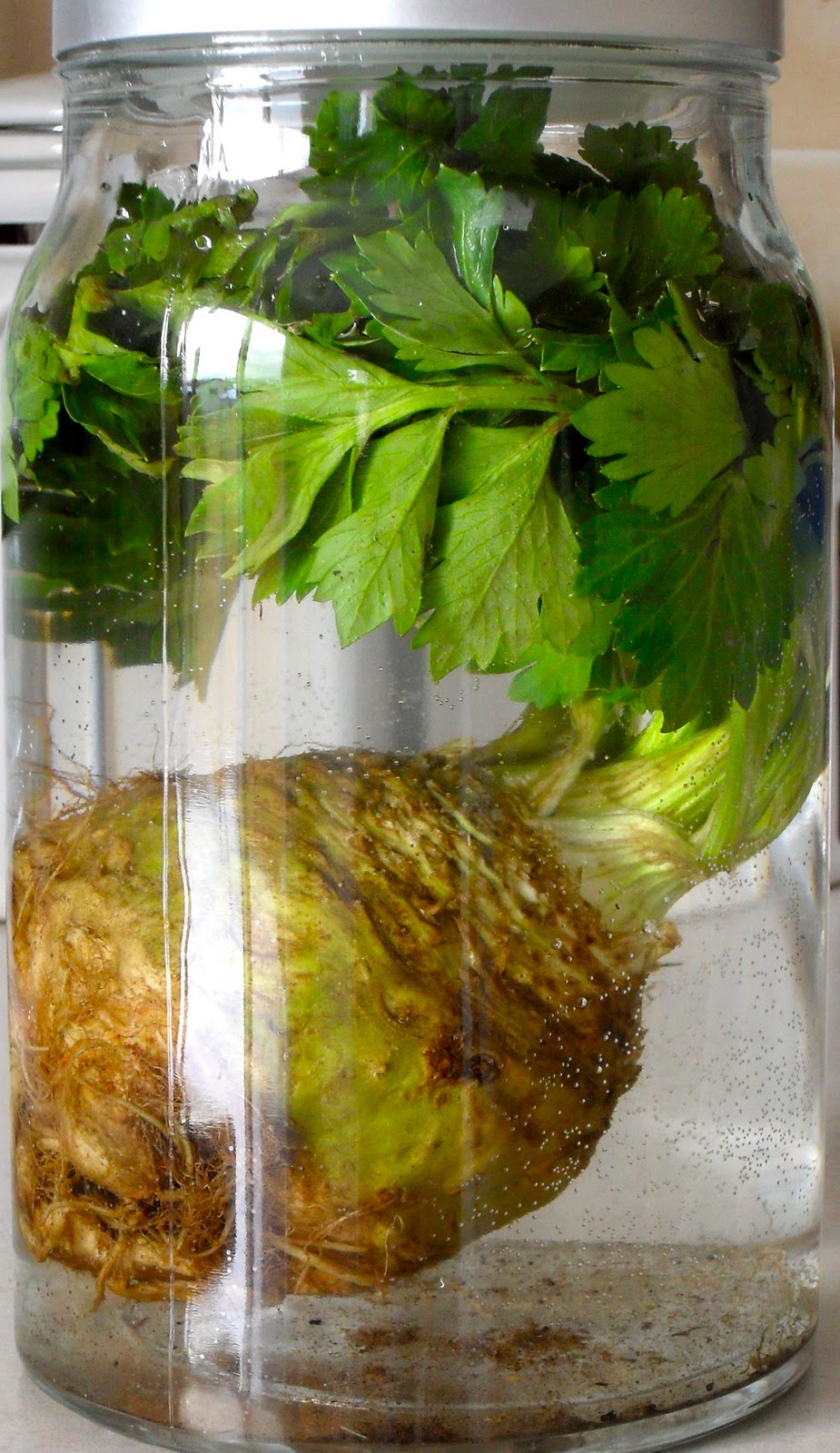
Hydrating celeriac
1 large sweet white onion
1 hydrated celeriac with stalks and leaves attached
1 tablespoon extra virgin olive oil
½ teaspoon ghee (clarified butter)
½ cup  black quinoa
¾ cup water

Dressing
2 tbsp. chopped celeriac stalks and leaves
2 tbsp. chopped cilantro
3-4 tablespoons apple cider vinegar
¼ teaspoon brown sugar
sea salt and black pepper, to taste

Preparation:

1. Thoroughly wash whole celeriac. Immerse celeriac in a deep container of cold water to hydrate. (It is preferable that this is done the day prior to making this recipe.)


2. Thoroughly wash beet. Place whole beet root and bay leaf in steamer basket in a pressure cooker. Add 2-3 cups water. Bring the pressure cooker to a boil (following instructions in your manual). Reduce heat to medium and cook beet for 10 minutes. Turn off the heat and leave pressure cooker to rest until the safety latch is released. Remove beet to an air-tight container to cool. Discard bay leaf and pot liquor.

3. Meanwhile, rinse quinoa. Bring ¾ cup water to boil in a small pot. Add quinoa. Return to the boil, then reduce heat to simmer. Simmer, covered, for 15 - 20 minutes. Turn heat off, leaving quinoa to cook and absorb the remaining water.

4. Cut away ¼ of a large sweet white onion. Peel. Chop into a small dice, producing approximately ½ cup.

5. Cut away ¼ of the celeriac (the root only). Peel. Chop into a small dice, producing approximately ½ cup. Add to onion dice.
Diced steamed beet root

6. Slip skin off beet. Cut beet into small dice.


Sauteing onion and celeriac dice


7. Heat olive oil and ghee in saute pan over medium heat. Add onion and celery root dice. Saute until onion turns translucent. 


8. Fold 1 cup cooked quinoa into the onion and celery root mixture. Heat through.

1 cup cooked black quinoa


Black quinoa, onion and celeriac


9. Add diced beet. Raise heat to medium. Cook and stir for 5 minutes. 

10. Turn out into a serving dish. 
Steamed beet root with black quinoa

Dressing:
Snip away two stalks with leaves from celeriac. Chop into small dice. Chop cilantro. Add to diced celeriac leaves and stalks. Add vinegar, brown sugar, sea salt and pepper.  Stir. Serve as an accompaniment in a small bowl.
reade more... Résuméabuiyad

Pressure-cooker borscht

The borscht produced by this recipe is actually quite different from Borsht No.1. The beet is cooked first, then the remaining root vegetables and cabbage. All the ingredients are brought together just before the borscht is eaten. Aficionados of borscht will certainly notice the difference. They'll love it anyway.

Pressure-cooker borscht


                                                                              Yield: 4 - 6 servings

Ingredients:

1 medium-sized beet, about 7.5 cm. (3 in) in diameter
3 cups water
1 cup purple cabbage, grated
½ cup red onion, diced
1 carrot, grated
½ cup rutabaga, diced
1 clove fresh garlic, minced
3 sprigs fresh dill (whole)
2 - 3 cups pot liquor from steaming the beet
1 tablespoon lemon juice
sea salt, to taste
freshly ground black pepper, to taste
2 tablespoons commercial soured cream for each bowl of borscht

Chopped beet (center), chopped rutabaga (top right),
grated carrot (bottom right), and grated purple cabbage


Preparation:

1. Thoroughly wash the vegetables.

2. Place beet in pressure cooker with 3 cups of water. Raise temperature to boiling on 'High' heat, then reduce heat to 'Medium' and cook for 10 minutes. Turn off heat, leaving the pressure cooker as it is to steam until the safety lock releases. 

3. Meanwhile, prepare the remaining vegetables as indicated above, i.e., grate the cabbage and carrot, peel and dice the rutabaga and red onion, and mince the garlic. 

4. When the pressure cooker's safety lock releases, remove beet to an air-tight container and leave to cool. Pour the liquid from the pressure cooker into a heat-proof container and reserve.

5. Place a steamer basket inside the pressure cooker. (See Pressure cooker - Part 2 to see what a steamer basket looks like if you don't know). Add three cups of water to the pressure cooker, just enough to touch the bottom of the a heat-proof, non-reactive dish, such as Pyrex™ or Corning Ware™, which you will place inside the steamer basket. 

Chopped and grated vegetables, except beets,
ready for cooking in the pressure cooker

5. Add the fresh dill and prepared vegetables, except the beet, to the dish inside the pressure cooker. Place the lid on the pressure cooker and cook these vegetables as you did the beet.

6. Meanwhile, peel and dice the beet, making a small dice. 

7. When the pressure cooker's safety lock releases, the prepared vegetables are finished cooking. Remove them to a non-reactive* soup pot, such as the glass pot shown in the image below. 

8.  Add diced beet, and the pot liquor reserved from cooking the beet. Bring to boil, then remove from the heat.

9. Add lemon juice and stir.

Beets and all borscht ingredients melding flavours prior to serving

10. Ladle into soup bowls and top each with commercial soured cream.

* The purpose of using a non-reactive cooking pot is to retain as much colour -- and therefore, phyto-nutrients -- as possible in borscht.

reade more... Résuméabuiyad